
Ever wondered how to nail down the perfect spin for your watch winder? It's not just luck—it's all about getting it spot on.
Picture this: your watch gliding effortlessly, keeping time flawlessly day in, day out. But how do you crack the code to find the precise rhythm for this horological symphony?
It all starts with understanding the intricate balance between Turns-Per-Day and what your watch craves.
Get ready to uncover the secrets behind the optimal rotation speed that can make a world of difference in keeping your timepiece ticking smoothly like a charm.
Key Takeaways
When it comes to keeping your automatic watch in top shape, aiming for 650-950 Turns-Per-Day (TPD) is key. Different watch movements have specific TPD requirements to avoid overwinding or underwinding, so it's essential to get it right. Luxury watch brands often have their own recommendations for the best performance.
To enhance the longevity and accuracy of your watch, make sure to sync the watch movement with the winder's frequency. Fine-tuning the rotation frequency within the recommended range can significantly boost your watch's performance and durability. It's like giving your watch the perfect rhythm to keep it running smoothly for years to come.
Personalizing the care for your automatic watch based on these guidelines can elevate your experience with it, ensuring it remains a reliable timepiece that you can count on every day.
Understanding Watch Winders
If you're new to the world of automatic watches and watch winders, let's break it down for you in simple terms. Watch winders are like little helpers for your automatic timepieces, making sure they stay wound even when you're not wearing them. They basically mimic the movement of your wrist to keep your watch ticking accurately.
So, instead of having to manually wind your watch every time you want to wear it, a watch winder takes care of that for you. This is especially handy for those fancy luxury watches with intricate inner workings. Plus, most winders let you customize settings like the number of turns per day and the direction of rotation, so you can tailor the winding process to suit your watch's needs.
When it comes to using a watch winder, it's crucial to follow the manufacturer's guidelines or consult a watch expert to get the settings just right for your specific watch model. Different watches have different requirements for turns per day to keep them running smoothly. Overwinding can actually harm your watch, so setting up the winder correctly is key.
The Importance of Rotation Frequency
When it comes to keeping your automatic watch in top shape, the rotation frequency of a watch winder is key. This nifty device, measured in Turns-Per-Day (TPD), mimics the natural wrist movement to ensure your watch stays wound and accurate when you're not wearing it. Different watches, like mechanical or automatic ones, have specific TPD needs to keep them ticking perfectly.
Getting the TPD right is crucial to avoid two major pitfalls: overwinding, which strains your watch's insides, and underwinding, which messes with its timekeeping. Matching the rotation frequency to your watch's requirements is a surefire way to maintain its power reserve consistently. By dodging overwinding and underwinding, you safeguard your watch's intricate parts, ensuring it runs smoothly and precisely for years to come.
The rotation frequency directly affects how well your watch winder works, so setting the TPD correctly is a must. Following the recommended TPD guidelines not only boosts your watch's performance but also safeguards its delicate mechanisms. This care and attention enhance the watch's durability and accuracy, making sure it stands the test of time. So, next time you're setting up your watch winder, remember: the right TPD keeps your watch ticking like a champ!
Decoding the Rotational Setting
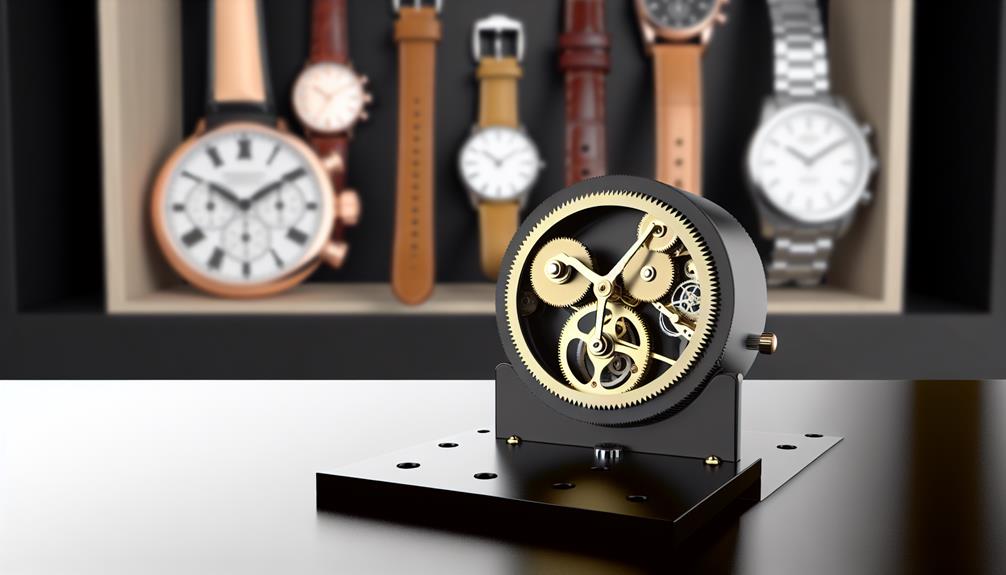
To keep your automatic watch performing at its best and lasting for years, it's crucial to grasp how to adjust the rotational setting on your watch winder. This setting controls how your timepiece is wound, determining the direction and frequency of winding. It's a key factor in maintaining the overall health of your watch. Different types of watch movements, like automatic, manual, or quartz, need specific rotational settings to ensure they operate smoothly. Adhering to the manufacturer's recommendations for Turns Per Day (TPD) is vital to avoid problems like overwinding or underwinding, which can harm your watch's mechanism.
Customizing the rotational setting on your watch winder is essential for preserving the accuracy and longevity of your automatic watch. By setting the right TPD for your watch model, you guarantee that the mainspring is consistently wound, enabling your watch to function correctly. Overwinding can strain the movement unnecessarily, potentially causing damage, while underwinding can lead to time loss or complete stoppage. Therefore, adjusting the rotational setting according to your watch's needs is a fundamental aspect of watch care. Remember, precise adjustments to the rotational setting lead to precise performance and durability for your watch.
Ideal Rotation Frequency for Automatic Watches
When it comes to keeping your automatic watch running smoothly for years to come, choosing the right rotation frequency is key. Typically, you'll want to aim for around 650 to 950 Turns-Per-Day (TPD) to ensure that your watch stays wound up and on time. This TPD directly affects how well your automatic watch stays ticking by keeping the mainspring properly tensioned.
Different luxury watch brands may have specific recommendations for the ideal TPD to keep their movements in top shape. It's important to match your watch winder's rotation frequency with these TPD guidelines to avoid winding too much or too little, which can mess with your watch's accuracy and power reserve.
Luxury watchmakers often suggest particular TPD settings to maintain your timepiece's performance. Playing around with the TPD settings can help you figure out the perfect rotation frequency for your automatic watch. By tweaking the TPD, you can tailor the winding process to suit your watch's needs, ensuring it stays in prime condition.
Ideal Rotation Frequency for Mechanical Watches
When it comes to keeping your mechanical watch in top shape, getting the winding just right is key. You'll want to aim for a rotation frequency between 650 and 950 Turns-Per-Day (TPD) to ensure optimal winding. Each watch movement has its own TPD requirements, so matching the rotation frequency accurately is crucial for peak performance. Syncing up the watch's movement with the winder's rotation frequency is essential for maintaining precision in your timepiece.
Luxury watch brands like Rolex often provide specific TPD recommendations to keep your watch running smoothly. It's worth trying out different rotation frequencies to find the perfect setting for your watch's needs. By fine-tuning the rotation frequency within the recommended range, you can boost the longevity and performance of your watch.
When setting the rotation frequency, take into account factors like the watch's power reserve, how efficiently it winds, and the manufacturer's suggestions. Getting the rotation frequency just right ensures that your watch stays well-wound, ready to keep you on time during your daily adventures with accuracy and reliability.
Frequently Asked Questions
How Fast Should a Watch Winder Spin?
When setting up your watch winder, it's crucial to find the right spin speed. Start by checking the manufacturer's recommendations for Turns-Per-Day (TPD) – aim for 650-850 TPD. Keep an eye on how your watch performs to avoid overwinding. Don't be afraid to test different TPD settings until you discover the ideal spin frequency for your specific watch model. It's all about finding that perfect balance to keep your timepiece in top condition.
Is 900 TPD Too Much for Rolex?
Hey, ever heard about winding your Rolex at 900 TPD? That's pushing it too far! It's like playing with fire. Stick to a safer range of 650-850 TPD. Overwinding your Rolex can really put some strain on it. It's best to follow the guidelines and keep things smooth. By adjusting the TPD within the recommended range, you can ensure your Rolex stays in top shape for the long run. Remember, longevity is key here. You've got this!
How Do You Know What Setting to Put Your Watch Winder On?
When setting up your watch winder, it's essential to consider your watch's movement type. Start by figuring out if it requires uni-directional or bi-directional winding. Try out different TPD (turns per day) settings, like 650 rotations for Swiss movements, and keep an eye on your watch's accuracy to find the ideal setting. Make adjustments to the rotations per minute (RPM) and direction as needed to keep your watch running smoothly.
How Often Should I Use My Watch Winder?
When it comes to using your watch winder, it's essential to match it with your watch's power reserve. For most automatic watches, giving it a wind daily or every other day should do the trick. Watches with longer power reserves might only need winding once a week. It's always a good idea to check the manufacturer's guidelines for the best results. Just keep your watch ticking smoothly!