
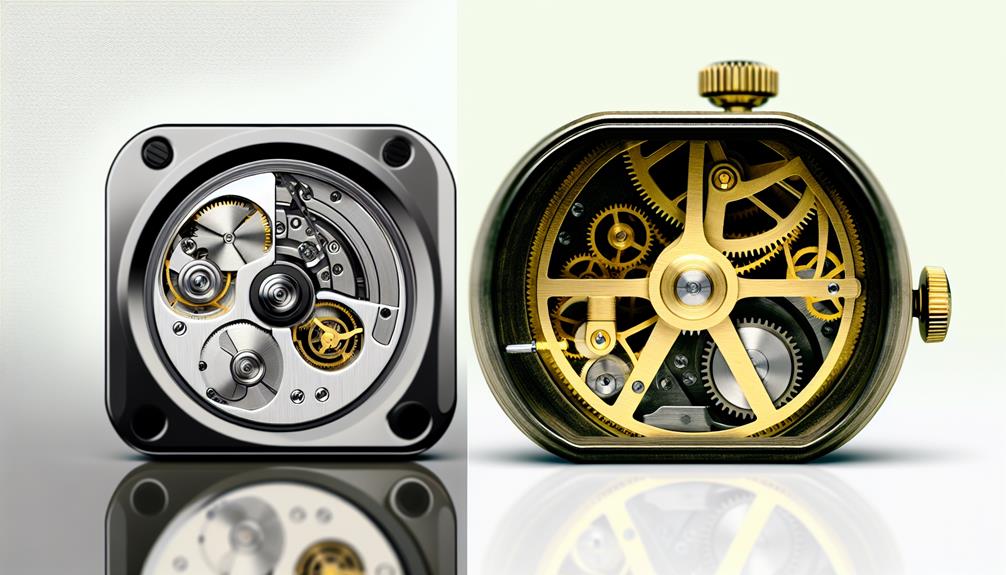
When it comes to the debate between manual and automatic watch winders, the decision might seem simple at first glance, but it delves deeper into the heart of watch appreciation. Both options bring unique advantages that cater to different tastes and lifestyles.
Whether you relish the hands-on pleasure of winding up a beloved timepiece or prefer the hands-free ease of automatic winding, the question arises: which method truly shines in the realm of horology?
Key Takeaways
When it comes to watch winders, there are a few options to consider based on personal preferences and experiences.
Manual watch winders offer a special connection to your watch, giving you the hands-on satisfaction of winding it yourself. It's like bonding with your timepiece in a more intimate way.
On the other hand, automatic watch winders provide convenience by mimicking the natural movements of your wrist. This hands-free approach keeps your watch running smoothly without much effort on your part.
If you enjoy the tactile experience, a hand-cranked watch winder can be a rewarding choice. The manual winding process not only ensures your watch stays accurate but also emphasizes your commitment to its maintenance.
Ultimately, the decision between manual and automatic watch winders boils down to your preference for a personal touch or convenience. Whichever option you choose, the goal remains the same – to keep your watch in top condition and ready to wear whenever you need it.
Understanding Automatic Watch Winders
Are you tired of constantly having to manually wind your automatic watches before wearing them? Automatic watch winders are here to save the day! These nifty devices mimic the natural movements of your wrist, ensuring that your self-winding timepieces keep ticking accurately and smoothly.
One of the best perks of using an automatic watch winder is that it helps maintain the power reserve of your automatic watches. With this feature, your watch is always good to go, no winding required before strapping it on. By keeping your watch in motion, the winder prevents any slowdowns or stoppages in the watch's mechanism due to inactivity, preserving its precision.
Regular use of an automatic watch winder also minimizes the need for frequent adjustments. By keeping the watch moving, the winder ensures that all the internal parts stay well-lubricated and in top-notch condition. This not only saves you time but also extends the lifespan of your watch by reducing wear and tear on its intricate inner workings. Investing in an automatic watch winder is a smart move to keep your automatic watches running smoothly and lasting longer. Trust me, it's worth it!
The Mechanism of Automatic Watch Winders
Automatic watch winders are like the unsung heroes of watch care, quietly ensuring your automatic timepieces are always ready to go. These nifty gadgets use a clever rotor system to mimic the natural movements of your wrist, keeping your watch wound up and ticking accurately.
The magic lies in how the rotor spins in different directions and speeds, just like your wrist moves during the day. This smart motion prevents overwinding, protecting your watch's delicate insides. By imitating the way you wear your watch, these winders help spread lubrication evenly, reducing wear and tear on your watch components.
What's really cool is how these winders prevent any risk of over-tensioning, which could mess with your watch's precision. This attention to detail not only prolongs the life of your automatic watches but also ensures they keep performing at their best. So, if you're a watch aficionado, having an automatic watch winder is a must to keep your timepieces in top shape.
Power Source of Automatic Watch Winders
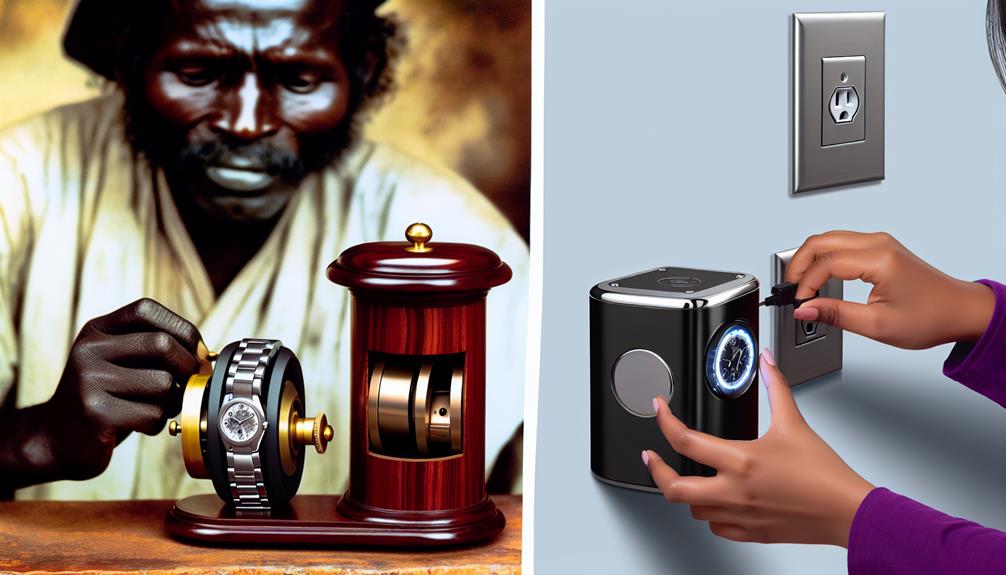
When it comes to powering automatic watch winders, you basically have two main choices: battery-operated or AC-powered.
Battery-operated winders give you the freedom to move them around and not worry about being near an outlet all the time.
On the other hand, AC-powered ones keep your watches winding without the hassle of changing batteries.
Your decision between the two boils down to your lifestyle and how you intend to use the watch winder.
Battery-Operated Watch Winders
When it comes to keeping your automatic watches ticking on time, battery-operated watch winders are the way to go. These nifty gadgets run on batteries, giving you the freedom to place them wherever you please without being tethered to an outlet. Perfect for those spots in your home or office where sockets are scarce, these watch winders ensure your timepieces are always wound up and ready to wear.
Plus, some models come with rechargeable batteries, making them not only convenient but eco-friendly too. With a battery-operated winder, you can count on your watch staying on time without the hassle of constant plugging and unplugging. Here's a quick look at why these watch winders are a game-changer:
- Portability: Move them around effortlessly for the perfect spot.
- Rechargeable Batteries: Go green with options that can be juiced up again and again.
- Consistent Winding: Keep your automatic watches ticking smoothly, so they're always good to go.
Say goodbye to fiddling with cords and outlets—battery-operated watch winders have got you covered!
Ac-Powered Watch Winders
If you're on the hunt for a reliable power source to keep your automatic watches running smoothly, AC-powered watch winders are the way to go. These winders provide a steady stream of power, doing away with the hassle of changing batteries or recharging, ensuring top-notch performance.
Perfect for long-term use, AC-powered watch winders are a top choice for those with high-end watch collections. With the convenience of plugging into a regular outlet, they offer easy and efficient operation.
The consistent power they provide guarantees the accuracy and longevity of your automatic watches, making them a practical and trustworthy option for watch enthusiasts keen on keeping their timepieces in mint condition.
Understanding Manual Watch Winders
When it comes to manual watch winders, there's a certain charm in getting hands-on with your timepiece. You simply turn the crown around 25-30 times to keep the watch's mechanical movement ticking smoothly. This hands-on winding process isn't just a chore; it's a way to stay connected with your watch, making sure it stays accurate and reliable.
Manual watch winders offer a more traditional and personal touch to caring for your watch. By hand-winding it, you forge a special bond with your timepiece, making the ownership experience more intimate. It also helps maintain the watch's power reserve, ensuring the movement functions flawlessly.
While manual watch winders may require a bit of effort, they're perfect for watch enthusiasts who appreciate the craftsmanship and artistry behind these intricate pieces. The act of manually winding the watch allows you to delve into its inner workings, fostering a deeper admiration for its mechanical complexity.
It's important to avoid overwinding the watch, as this could potentially harm the crown and internal gears. However, most modern watches have safety features to prevent this mishap. Overall, manual watch winders cater to those who value the traditional aspects of watch care and prefer a more hands-on approach to preserving their timepieces.
The Mechanism of Manual Watch Winders
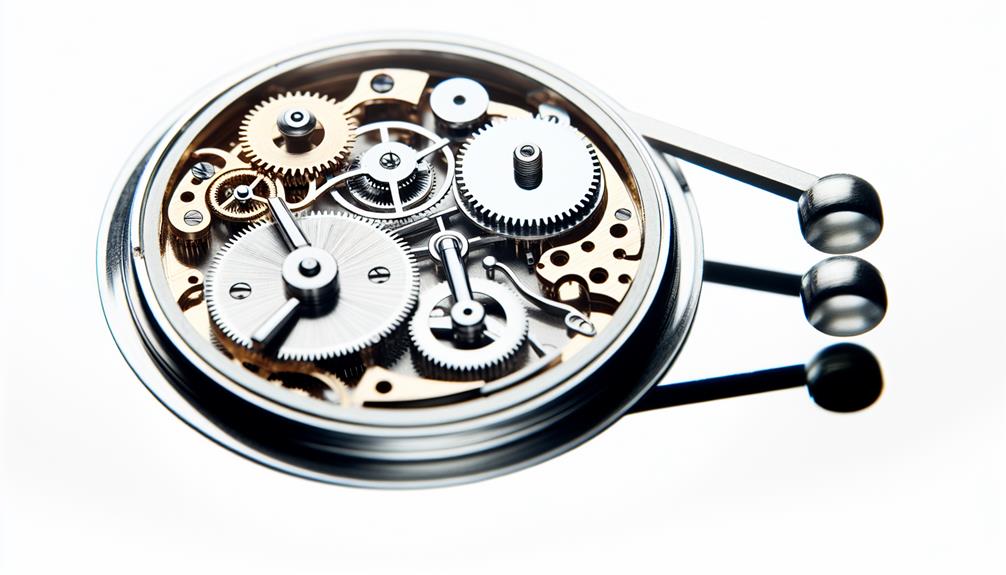
When it comes to winding a manual watch, it's all about that hands-on connection with your timepiece's inner workings. You get to turn the crown yourself, feeling the mechanism come alive with each twist. It's like a ritual that watch enthusiasts find truly rewarding.
With manual winding, you'll typically need to give the crown about 25-30 turns to fully wind up your watch. It's a precise process that lets you feel the tension building up as you go, ensuring everything runs smoothly. Just be careful not to overwind, as that could put strain on the gears and crown. While modern watches have safeguards against this, it's still wise to be mindful during winding.
For those who appreciate the traditional charm of watch maintenance and enjoy being hands-on, manual winders are the way to go. There's something special about winding your watch yourself—it adds a personal touch to timekeeping. It's not just about telling time; it's a nod to the craftsmanship and artistry that goes into watchmaking.
Power Source of Manual Watch Winders
When you use a manual watch winder, you're the one powering it up by turning the crank yourself. Each turn you make adds energy to the timepiece, keeping it ticking. This hands-on approach gives you full control over how much you wind it, ensuring your watch stays on track.
Unlike automatic versions, manual winders rely on your consistent winding to stay in top shape. It's a more traditional way of keeping your watch going, requiring your personal touch to keep things running smoothly.
Manual Winder Mechanisms
When it comes to manual watch winders, it's all about getting hands-on with your timepieces. Using a key or handle, you manually rotate these winders to keep your watches ticking. Forget about batteries or electricity – manual winders are the go-to choice for those who appreciate a more traditional approach to watch care.
Picture this: you turn the key, feel the mechanism winding up, and know you're personally keeping your watches in top shape. Some manual winders even come with key-winding features, adding a touch of vintage flair to the whole ritual. It's a nostalgic and mechanical way to ensure your prized watches stay running smoothly.
Hand-Cranked Operation
When you wind your watch manually with a key or handle, it's like stepping back in time to a hands-on experience that watch lovers truly appreciate. There's something special about feeling the gears turn as you take control of winding your timepieces without any reliance on batteries or electricity. It's a process that connects you directly to the inner workings of your watch, turning maintenance into a satisfying ritual.
The act of hand-cranking your watch adds a personal touch that can't be replicated by modern conveniences. It's a unique and engaging experience that speaks to the craftsmanship and tradition behind watchmaking. For those who value the mechanical aspect of their watches, manual winding becomes more than just a task—it becomes a moment to cherish and enjoy.
Traditional Winding Process
Switching from the old-school hand-cranked method, manual watch winders rely on good old elbow grease to keep your timepiece ticking.
When you manually wind a watch, you're not just turning a knob – you're transferring your energy to keep its inner workings humming along smoothly. This hands-on approach ensures that your watch stays accurate and on time.
You play a crucial role in maintaining your watch's functionality by regularly winding it up. By actively engaging in this winding process, you're essentially giving your watch the power it needs to run flawlessly.
It's all about that personal touch and commitment to keeping your watch in top shape.
Frequently Asked Questions
Is Manual Winding Better Than Automatic?
When it comes to choosing between manual winding and automatic watches, it really boils down to what floats your boat. Manual winding gives you that tactile connection, the feeling of being hands-on with your timepiece. On the flip side, automatic watch winders offer a more convenient way to keep your watch running without the need for constant winding. So, it's all about whether you prefer the engagement of manual winding or the ease of maintenance with automatic options. It's like deciding between enjoying the process or opting for a hassle-free experience. Ultimately, the choice is yours based on what suits your style and preferences.
Is It Better to Keep an Automatic Watch on a Winder?
If you own an automatic watch, using a winder can be a game-changer. It helps maintain the power reserve and ensures your watch keeps accurate time. This is especially handy for watches with complicated features that are a hassle to reset manually. By using a winder, you simplify the upkeep of your watch and have the peace of mind that it's always ready to go when you need it.
Do Watch Winders Work for Manual Watches?
Absolutely, watch winders can be handy for manual watches, but they might not be a game-changer since manual timepieces need daily winding. While watch winders can assist in keeping manual watches ticking, giving them a quick wind by hand is still crucial for accurate timekeeping. It's like having a backup plan, ensuring your watch stays on track even when you're not wearing it regularly. So, while watch winders can lend a helping hand, your personal touch is what truly keeps your manual watch running smoothly.
How Do I Choose a Watch Winder?
When you're on the hunt for a watch winder, there are a few key things to keep in mind to make sure you're getting the right one for your needs. Start by thinking about how many Turns Per Day (TPD) settings you need to keep your timepiece ticking smoothly. Check out the rotation directions to ensure they match your watch's requirements. Look for a winder with a high-quality motor to guarantee reliable performance. Consider the design as well, making sure it complements your style and preferences. Lastly, decide if you need a single winder or multiple winders based on the size of your watch collection and how you plan to use them. These tips will help you find the perfect watch winder to keep your timepieces in top-notch condition.