

So, you're diving into the world of setting up your watch winder, where precision meets expertise.
Ever pondered the delicate interplay between your timepiece and its winder, where every twist counts?
Understanding the ins and outs of TPD, rotations, and directions is just the tip of the iceberg on this horological adventure.
Get ready to uncover the secrets that will take your watch winding game to a whole new level of sophistication and reliability.
Key Takeaways
Setting the right turns per day (TPD) for your watch depends on the type of movement it has. It's crucial not to overwind your timepiece to protect its delicate mechanism. Adjusting the winding direction to suit your watch's specific needs can optimize its performance.
Once you've set up your watch winder, keep an eye on its accuracy. If needed, make any necessary adjustments to ensure it's running smoothly. Following the manufacturer's recommendations is key to extending your watch's longevity and keeping it in top condition. Your watch will thank you for the care you provide!
Understanding Watch Winder Basics
So, you've got yourself an automatic watch, huh? Keeping that beauty ticking smoothly requires a bit of know-how on watch winders. Let's break it down for you in simple terms.
First off, let's talk about Turn Per Day (TPD) settings. These are like the magic numbers for your watch winder. Different watches need specific TPD settings to keep them running smoothly. This setting decides how many spins the winder makes each day, mimicking your wrist's movement to keep your watch on point.
Direction matters too. Most automatic watches wind in two ways: clockwise and counterclockwise. But some need just one direction. Knowing your watch's winding style is key for setting up your winder right. Getting the direction wrong can mess with the winding process and mess up your watch's accuracy.
And then there are the winding patterns. Watch winders offer different rotation styles like back-and-forth or both ways. These patterns stop your watch from getting wound up too much and make sure the tension is spread out evenly. Picking the right pattern can help your watch last longer and stay accurate.
Getting the hang of these basics will keep your automatic watch in top shape. So, dial in those settings, and keep that timepiece ticking like a champ!
Importance of Rotational Settings
Let's talk about why the rotation settings on your watch winder matter.
Getting the rotation frequency right is key to keeping your automatic watch ticking smoothly.
It's all about avoiding winding it too much and keeping a consistent routine to keep your timepiece in top shape for the long haul.
Trust me, it's a game-changer for your watch's health and longevity.
Optimal Rotation Frequency
When it comes to keeping your automatic watch in top shape, nailing the right rotation frequency for your watch winder is key. Different watches have their own specific Turns Per Day (TPD) needs to perform at their best. The winding direction (clockwise, counterclockwise, or bi-directional) and adjusting the frequency according to the watch's power reserve are crucial to avoid overwinding and optimize performance. By keeping an eye on the watch's accuracy over time, you can fine-tune the rotational settings for peak operation. Let's break it down with a simple guide:
| TPD Range | Winding Direction | Power Reserve |
|---|---|---|
| 650-800 | Clockwise | 30-40 hours |
| 900-1250 | Bi-directional | 40-50 hours |
Getting these settings just right ensures your watch stays in top condition and keeps ticking smoothly.
Avoiding Overwinding Issues
Hey there watch enthusiasts! When it comes to keeping your timepiece in top shape, selecting the right settings for your watch winder is key. You want to avoid overwinding, which can strain your watch's clutch mechanism.
The Turns Per Day (TPD) setting is crucial here. It basically tells the winder how many spins to make in a day. Matching this setting to your watch's requirements is essential to prevent any damage from overwinding. Also, remember to consider the direction of your watch movement. Some watches wind in only one direction, so choosing the correct setting is a must.
Consistency for Watch Health
When it comes to keeping your watch in top shape, maintaining the right rotational settings is key. The Turns Per Day (TPD) setting on your watch winder is crucial for ensuring that your timepiece runs smoothly and accurately.
By setting the TPD according to your watch's needs, you can prevent unnecessary wear and tear on its delicate parts. Proper rotational settings also help steer clear of overwinding, which could harm your watch.
Following the manufacturer's recommendations for rotational settings is vital to keep your watch healthy and ticking for years to come. By paying attention to these details and adjusting the rotational settings accordingly, you can ensure that your watch stays in great condition.
Common Setting Mistakes to Avoid
Setting the Turns Per Day (TPD) on your watch winder is key to keeping your timepiece in top shape. Don't crank up the TPD too high, though. Overwinding can put unnecessary strain on your watch's mechanism, leading to potential damage. It's like giving your watch an extra-strong espresso when it just needs a regular cup of coffee.
Another essential point to note is the direction of the turns. Making sure your watch winder spins in the right direction is crucial for optimal winding efficiency and accuracy. It's like following the recipe for a perfect cocktail – get the ingredients and proportions right for the best results.
One common mistake isn't tailoring the TPD settings to your watch's specific needs. Different watch models have different ideal TPD requirements, so it's important to customize the settings accordingly. Imagine trying to fit a square peg into a round hole – it just won't work.
And don't forget to keep an eye on your watch's accuracy over time. After setting up the winder, check in regularly to make sure everything is running smoothly. It's like giving your car a tune-up to keep it running like a well-oiled machine.
Lastly, consider your watch's power reserve and accuracy when adjusting the settings. Ignoring these factors can impact the overall performance of your watch winder. It's like trying to run a marathon without proper training – you mightn't reach the finish line.
Determining Directional Settings
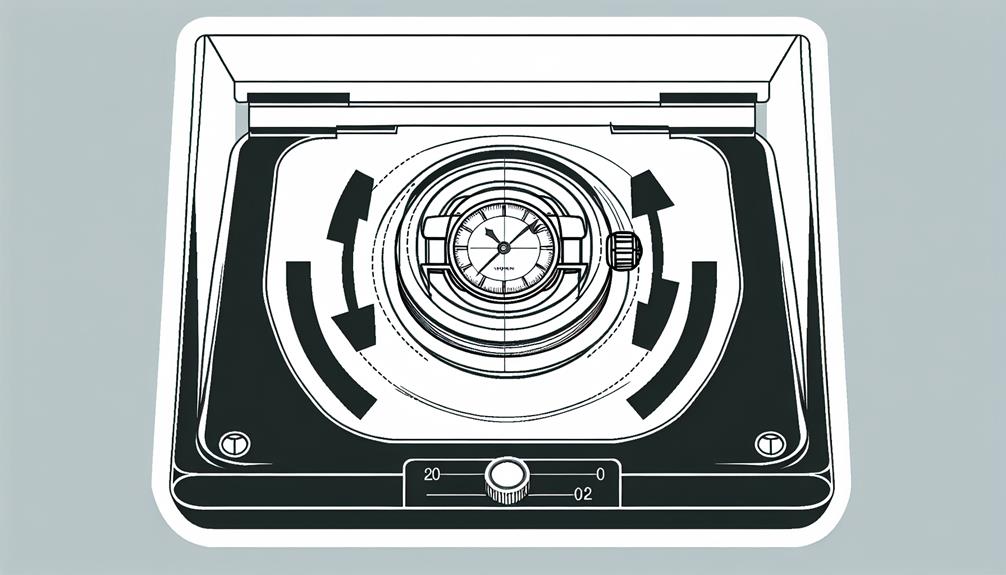
When it comes to setting up your watch winder, getting the right direction is key to keeping your timepiece ticking smoothly. Different watches have specific needs when it comes to winding direction. Some watches only wind up in one direction, while others prefer a back and forth motion. To make sure your watch stays in top shape, it's crucial to set the winder accordingly.
If your watch is uni-directional, it means it only winds up in one direction. Set your winder to rotate in that specific direction to ensure proper winding. For watches that benefit from bi-directional winding, make sure your winder alternates between clockwise and counterclockwise rotations.
Some watch winders even allow for custom directional settings, so check your watch manual to see if your timepiece requires a unique winding direction. By understanding and setting the correct winding direction, you'll ensure your watch receives the right amount of turns per day to stay accurate and functional.
Optimal Turns Per Day (TPD)
Ensuring your watch is performing at its best requires knowing the right Turns Per Day (TPD) setting. It's essential to adjust the TPD based on your watch's movement type and the recommendations from the manufacturer.
This precise adjustment is crucial for maintaining the accuracy and longevity of your timepiece, ensuring it operates at its peak performance level.
TPD Importance Explained
When it comes to keeping your watch running smoothly, understanding the Ideal Turns Per Day (TPD) is key. The TPD setting on your watch winder plays a crucial role in how well your timepiece stays wound. Setting the TPD too high can strain the movement, while setting it too low mightn't give your watch enough juice to function properly. It's important to find the right TPD range recommended by the watchmaker to keep your watch in top shape.
To give you a clearer picture of TPD settings, here's a breakdown of the typical ranges for most watches:
- 650-850 TPD: This range works well for most watches and helps maintain accuracy.
- 900-1100 TPD: A common range that ensures your watch gets the right winding.
- 1150-1250 TPD: This higher range is ideal for preventing overwinding on some watches.
Keeping an eye on the TPD for your watch can make a real difference in how it performs and lasts over time. So, finding that sweet spot is worth the effort to keep your timepiece ticking smoothly.
Finding Ideal TPD
When it comes to keeping your watch running smoothly, choosing the right Turns Per Day (TPD) range tailored to your watch model is key for optimal performance. Different watch movements have specific TPD requirements, typically falling between 650 and 1250 TPD.
To determine the ideal TPD for your watch, check the manual or seek advice from the manufacturer. Setting the TPD too high can lead to overwinding, while setting it too low may cause the watch to stop. Adjust the TPD based on the watch's power reserve and accuracy to maximize its performance.
TPD and Watch Care
Taking care of your watch requires getting the Turns Per Day (TPD) setting just right to keep it accurate and fully charged. Most automatic watches perform best with a TPD range of 650 to 900 turns. It's crucial to match this setting with your watch model's needs to avoid over or underwinding.
Tailoring the TPD to the movement type is key for effective winding and the durability of your timepiece. For top-notch Swiss movements, you might need higher TPD settings like 1050 or 1250 for optimal performance.
Getting the TPD spot on not only avoids unnecessary strain on the watch but also ensures precise timekeeping, keeping your watch running smoothly and on point for years to come.
Risks of Overwinding and Underwinding
When it comes to adjusting your watch winder, it's crucial to be mindful of the risks linked with overwinding and underwinding. Overwinding your watch can cause unnecessary strain on its clutch mechanism, potentially leading to reduced accuracy and eventual damage. Conversely, if you underwind your timepiece, it may stop running altogether, resulting in inaccurate timekeeping.
Consistently overwinding your watch poses a more serious threat, potentially harming its internal components. It's essential to strike the right balance in your settings to steer clear of these risks. By setting the appropriate number of turns per day (TPD) and ensuring the correct winding direction, you can safeguard your watch from the perils of overwinding and underwinding.
To steer clear of overwinding, it's wise to adhere to the manufacturer's recommendations for the suitable TPD for your watch. This practice helps preserve the watch's mechanisms and prevents unnecessary stress on its parts. Additionally, setting the winder to the correct winding direction specified for your watch can further shield it from damage caused by overwinding. By paying attention to these specifics, you can maintain your watch in top condition and prolong its lifespan.
Tips for Avoiding Setting Errors

When you're setting up your watch, take a moment to get the time intervals and rotation directions right. It's crucial to match the Turns Per Day (TPD) settings with what your watch needs.
Don't forget to consult the manual for accurate programming to avoid any mishaps.
Setting Time Intervals
When it comes to keeping your watch running smoothly, it's crucial to fine-tune the settings on your watch winder. To get the best performance out of your timepiece, make sure to adjust the time intervals carefully to match your watch's winding needs. If you're not sure about the ideal turns per day (TPD) for your watch, refer to the manual or contact the manufacturer for guidance.
Setting the intervals incorrectly can lead to either overwinding or underwinding your watch, impacting its accuracy. To find the perfect configuration, try out different settings while keeping a close eye on how well your watch is keeping time. It's a bit of trial and error, but by experimenting with the intervals, you can ensure your watch is always fully wound and working flawlessly.
Understanding Rotation Directions
When it comes to keeping your watch in top shape with a watch winder, knowing the right rotation directions is key. Different watches need specific rotations like clockwise, counterclockwise, or both.
Take Rolex watches, for example, they benefit from back-and-forth rotation to ensure they wind evenly and stay accurate. Using the wrong rotation can mess up the winding process, leading to accuracy and power reserve issues, messing with how well your watch keeps time.
It's crucial to follow the manufacturer's instructions on rotation to keep your watch running smoothly. Make sure you're aware of how many turns per day your watch needs and set up the winder correctly to avoid any hiccups.
Precision in TPD Adjustments
Getting the most out of your watch winder means dialing in the Turns Per Day (TPD) settings just right. It's like fine-tuning a musical instrument – precision is key. Here are some tips to help you ace those TPD settings:
- Tailored TPD: Make sure your TPD settings match your watch's needs to avoid winding mishaps.
- Movement Matters: Different watches require different TPD tweaks for optimal performance.
- Avoid Overdoing It: Getting the TPD spot on helps prevent overwinding, keeping your watch in top shape.
- Precision is Key: Striking a balance in your TPD settings keeps your watch ticking accurately.
- Trial and Error: Don't be afraid to experiment with TPD adjustments until you find the sweet spot for each watch in your winder.
Preventing Overwinding Issues

When it comes to avoiding overwinding problems, it's crucial to grasp how excessive winding can affect your watch's clutch mechanism. Overwinding can put unnecessary strain on the clutch, leading to potential damage and eventual breakdown. To steer clear of these issues, make sure to adjust the rotations per minute (RPM) and turns per day (TPD) settings properly on your watch winder.
By tweaking the RPM settings, you can manage how fast the winder spins, ensuring it moves in a way that mimics your wrist's natural motions without overdoing it. Additionally, setting the TPD levels correctly helps regulate the winding cycles, preventing the watch from being wound too tightly.
Using a timer along with your watch winder can also be helpful. This lets you schedule specific winding sessions, ensuring your watch gets just the right amount of winding without going overboard.
While some watches have built-in safeguards to prevent overwinding and safeguard the internal mechanisms, it's still wise to follow the manufacturer's recommendations for RPM and TPD settings to steer clear of any potential overwinding issues.
Maintenance Strategies for Watch Winders
Keeping your watch winder in top shape is crucial for its longevity and smooth operation. Here are some practical maintenance tips to help you maintain your watch winder:
- Keep It Clean: Regularly dust off and clear any debris to ensure the mechanism runs smoothly.
- Inspect Watch Pillows: Check for any signs of wear and tear on the watch pillows, replacing them as needed to safeguard your timepieces.
- Ensure Stable Power: Maintain a steady power supply to avoid any interruptions in the winding process.
- Monitor Motor Performance: Listen for any odd noises and keep an eye on how efficiently the motor is running to catch any potential issues early.
- Follow Manufacturer's Instructions: Stick to the maintenance schedule and guidelines provided by the manufacturer to prolong the life of your watch winder.
Frequently Asked Questions
What Is the Best Setting for Watch Winder?
When it comes to setting up your watch winder correctly, it's always best to refer to your watch manual or reach out to a watchmaker for specific guidance. Factors like the TPD settings, which can range from 650 to 1250, and the rotation direction - whether it's clockwise, counterclockwise, or bi-directional - play a crucial role in ensuring your watch performs at its best. So, make sure to follow these guidelines to optimize your watch's performance and longevity.
Is 900 TPD Too Much for Rolex?
When it comes to adjusting the Turns Per Day (TPD) for your Rolex watch, it's best to stick to the recommended 650 TPD. While setting it at 900 TPD won't necessarily cause harm, it may put extra strain on the movement. Following Rolex's guidelines helps prevent unnecessary stress on your watch's mechanics. The key is to strike a balance in your TPD settings for optimal care of your timepiece.
Should Rolex Winders Be Clockwise or Counterclockwise?
When it comes to keeping your Rolex running smoothly, it's essential to wind it in the right direction. Most Rolex watches should be wound in a clockwise direction to ensure optimal performance. However, some models, like the Datejust, can benefit from winding in both directions. Incorrect winding can affect the accuracy of your watch, so it's crucial to follow Rolex's guidelines for maintaining its longevity and precision. Remember, a well-wound Rolex is a reliable timekeeper that will serve you well for years to come.
Can I Leave My Watch Winder on All the Time?
Leaving your watch winder running all the time isn't the best move. It can actually do more harm than good to your watch. To keep your timepiece in top shape, consider using a timer or setting specific schedules for winding. Be sure to keep an eye on how the winder operates to protect your watch's health.